Weld coding helps identify, track, and document welds throughout production to support inspection, traceability, and compliance requirements.
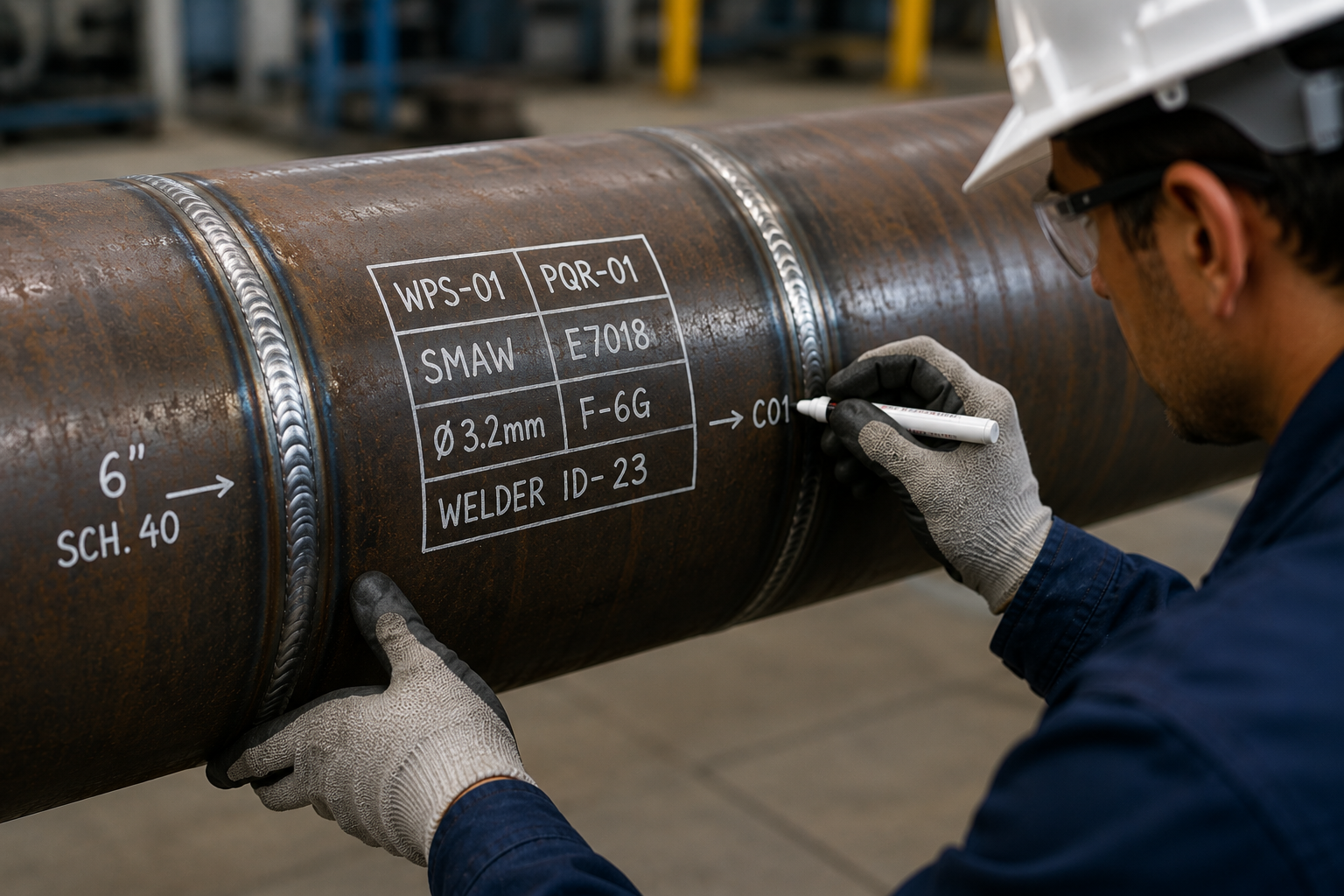
At Gammax, we provide weld coding support for fabrication, manufacturing, construction, and specialist engineering projects where controlled documentation and traceability are essential. Our services help clients establish weld identification systems that support inspections, improve quality control, and create clearer project records.
From initial planning through to verification and reporting, we deliver practical support that helps clients manage welding activities in a structured and traceable way.
Professional Weld Coding Services
Effective weld coding provides more than identification alone. It creates a structured way to record, track, and verify welding activities across a project.
Our team develops practical weld coding processes that improve traceability, simplify inspections, and maintain accurate project records.
Clients choose Gammax because we offer:
- Experienced inspection and quality specialists
- Support across multiple industries and applications
- Documentation processes aligned with recognised standards
- Clear reporting and practical guidance
- Access to inspection and testing services
- Flexible support for one-off and ongoing projects
Our objective is to help clients establish weld coding processes that support quality, consistency, and traceability.
What Is Weld Coding?
Weld coding is the process of assigning and managing information that identifies and tracks individual welds throughout production, inspection, and quality activities.
A weld code creates a reference that links each weld to its documentation, inspection status, and project records.
Depending on project requirements, weld coding may include:
- Weld identification references
- Weld location and component information
- Material details
- Welding process information
- Welder identification
- Inspection and testing status
- Documentation and traceability records
A structured coding system helps teams locate information faster and maintain better control over welding quality.
Why Weld Coding Matters
Weld coding creates a clear link between the physical weld and the records that support it.
Instead of relying on separate spreadsheets, drawings, and inspection notes, a structured coding system makes it easier to identify welds, locate supporting information, and monitor progress throughout a project.
Effective weld coding helps teams:
- Track welds throughout production
- Connect welds with inspection and testing records
- Reduce documentation errors
- Improve communication between production and quality teams
- Support project and compliance requirements
- Simplify reporting and record retrieval
This becomes increasingly valuable on projects involving large weld volumes, multiple inspection stages, or strict documentation requirements.
Our Weld Coding Process
We tailor weld coding requirements to the level of control and documentation each project requires.
Here is how our process unfolds:
Define the Coding Structure
We review project requirements and establish how welds will be identified, recorded, and tracked.
This may include:
- Project specifications
- Identification conventions
- Documentation requirements
- Inspection hold points
- Traceability expectations
Implement Weld Identification
We support the creation of practical coding systems that teams can apply consistently throughout the production process.
Activities may include:
- Assigning weld references
- Creating coding records
- Establishing document controls
- Linking inspection activities
- Maintaining record consistency
Verify and Maintain Records
We review coding information throughout the project to help maintain accurate and usable records.
This may include:
- Documentation checks
- Inspection coordination
- Record verification
- Traceability review
- Reporting support
Weld Coding Supports Inspection Activities
Weld coding works alongside inspection and testing processes by creating a consistent reference system for documentation and reporting.
Depending on project requirements, support may include:
- Welding inspections
- Non-destructive testing (NDT)
- Inspection documentation
- Quality assurance activities
- Welding procedure support
Integrating coding with inspection activities can improve record accuracy and make project information easier to manage.
Standards and Compliance Support
Where projects require documented control of welding activities, weld coding can support record management and quality processes.
Our support may include:
- Inspection documentation
- Project specifications
- Client acceptance requirements
- Quality records
- Traceability controls
- Relevant BS EN / ISO requirements
We focus on creating documentation systems that remain practical while supporting project requirements.
Industries We Support
We help companies maintain control of their weld records, inspection documentation, and traceability throughout production.
Our weld coding support is suitable for:
- Fabrication and manufacturing
- Structural steel projects
- Engineering and industrial operations
- Pressure-related applications
- Infrastructure projects
- Specialist production environments
Whether supporting a small fabrication or a large-scale project, we tailor our approach to meet the project’s documentation, inspection, and traceability requirements.
Why Choose Gammax for Weld Coding?
At Gammax, we use our knowledge of inspections and practical quality support to help clients set up weld coding systems. These systems are clear, easy to manage, and fit the project’s needs.
We focus on creating processes that make weld records easier to maintain, inspections easier to manage, and project information easier to access.
Speak to Gammax About Weld Coding
If you require support with weld identification, documentation, or inspection records, our team can help develop a practical weld coding approach that fits your project requirements.
Contact Gammax to discuss your weld coding requirements.
Our Services
We test welds so that you don’t have to
- GIIS Ltd, Units 12-13, Oaklands Business Park, Bury St Edmunds, Suffolk, IP33 2RW
- 01284 850 888
- info@gammax.co.uk
FAQ
Most frequent questions and answers
The information included depends on the project’s requirements. It usually has things like the weld identification, location, material, details about the welding process, whether it has been inspected or not, and links to the associated inspection and quality documentation.
No. Weld coding is not required for every project. The requirements for weld coding depend on things like how complicated the project is, what kind of quality is required, what kind of inspections are needed, and what the compliance requirements are for that project.
Weld coding makes it easy to connect welds to their inspection and testing records. This clear link makes it easier to track and manage documentation.
Yes. Weld coding makes it much easier to track welding activities and maintain clear records throughout production and inspection.
No. Weld coding is about identifying and managing the information and records for welds. On the other hand, welder qualification is about verifying that a welder is qualified to perform welding in accordance with the applicable standards and procedures.